
Trump Signs 10 Percent Global Tariff Order After Supreme Court Strikes Down Sweeping Duties
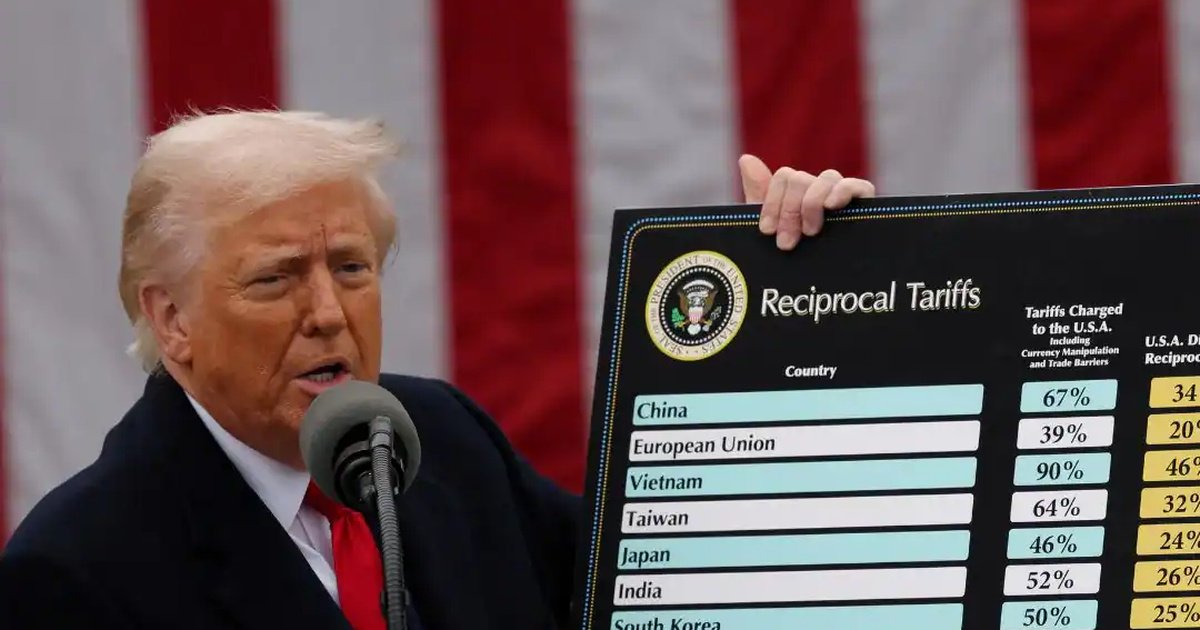
US President Donald Trump has signed a new executive order imposing a 10 percent global tariff on all imports into the United States, just hours after the US Supreme Court struck down much of his earlier sweeping tariff regime. The dramatic move marks a sharp escalation in the ongoing battle between the White House and the judiciary over the limits of presidential trade authority.
The new tariff, announced on February 20 and confirmed in a series of public statements, is set to take effect on February 24 and will remain in force for 150 days. Trump declared on social media that it would be “effective almost immediately,” underscoring the urgency with which his administration is seeking to preserve its trade strategy.
Supreme Court Delivers Major Blow to Trump Trade Policy
In a 6 to 3 ruling, the US Supreme Court dealt a significant setback to Trump’s signature America First economic doctrine. Chief Justice John Roberts, writing for the majority, said the president had exceeded his authority by using emergency economic powers to impose broad global tariffs.
“When Congress has delegated its tariff powers, it has done so in explicit terms and subject to strict limits,” Roberts wrote. He added that interpreting the International Emergency Economic Powers Act as allowing the president to impose “unbounded tariffs and change them at will” would represent a transformative expansion of executive authority.
Roberts was joined by the court’s three liberal justices, Sonia Sotomayor, Elena Kagan, and Ketanji Brown Jackson, as well as two conservative Trump appointees, Neil Gorsuch and Amy Coney Barrett. Justices Clarence Thomas, Samuel Alito, and Brett Kavanaugh dissented.
In a pointed observation, Roberts stated, “The United States, after all, is not at war with every nation in the world,” signaling the court’s rejection of the administration’s justification that sweeping tariffs were warranted under emergency powers.
Trump Responds With New 10 Percent Global Tariff
Rather than retreat, Trump responded with defiance. “It is my great honor to have just signed, from the Oval Office, a global 10 percent tariff on all countries,” he wrote on Truth Social.
At a combative White House news conference, Trump called the ruling “deeply disappointing” and said he was “ashamed of certain members of the court.” He alleged that the court had been “swayed by foreign interests,” though he did not provide evidence when pressed by reporters.
The new order imposes a 10 percent duty on all imports, including from countries that had previously negotiated separate tariff arrangements with the United States. According to a White House factsheet, trading partners that reached tariff deals with the administration will still face the new baseline duty, even if they had agreed to higher or more specific tariff levels before.
However, exemptions will remain in place for sectors under separate investigations, including pharmaceuticals, and for goods entering the US under the US Mexico Canada Agreement.
A White House official told AFP that the administration would seek ways to “implement more appropriate or pre negotiated tariff rates” in the future.
India US Trade Deal Remains Intact, Says Trump
Amid concerns over global trade relations, Trump insisted that the Supreme Court’s ruling would not affect the India US trade deal.
“They will be paying tariffs, and we will not be paying tariffs,” Trump said. “So the deal with India is they pay tariffs. It is a fair deal now, and we are not paying tariffs to them, and they are paying tariffs. We did a little flip. The India deal is on. All the deals are on. We are just going to do it in a different way.”
His comments are likely to draw attention in New Delhi and among global investors watching how bilateral agreements will be reshaped under the new tariff structure.
Legal and Financial Uncertainty Looms
The Supreme Court’s decision left several major questions unresolved, including what should happen to the estimated 134 billion dollars already collected in tariff revenue. As of mid December, US Customs and Border Protection data showed around 134 billion dollars had been collected under the challenged tariffs.
Trump suggested that any potential refunds could become a prolonged legal battle. “We will end up being in court for the next five years,” he said, noting that the refund issue was “not discussed” in the court’s ruling.
Market reaction to the decision was relatively muted. On Friday morning, the S and P 500 rose 0.3 percent, the Dow Jones Industrial Average gained 116 points, or 0.2 percent, and the Nasdaq Composite was up 0.5 percent. Investors appeared to be weighing both the legal setback and the administration’s swift move to reassert tariff authority through alternative mechanisms.
Global Reaction and Political Fallout
International reactions were swift. Germany said it was in “close contact” with the United States and emphasized the need for “stability and predictability” in commercial relations. The European Union said it was carefully analyzing the ruling and seeking clarity from Washington.
Canada welcomed the decision, saying it affirmed that Trump’s tariffs were “unjustified.” In the United States, Senate Majority Leader Chuck Schumer praised the ruling as a victory for American consumers, calling the previous tariff policy “chaotic and illegal” and a hidden tax that raised costs for families, farmers, and small businesses.
Vice President JD Vance, meanwhile, criticized what he described as “lawlessness” in the court’s decision, signaling that the administration sees the ruling not only as a legal loss but as part of a broader political confrontation.
A Defining Moment for US Trade Policy
The clash between the Supreme Court and the White House marks one of the most consequential moments of Trump’s second term. Tariffs have been central to his economic agenda, reshaping trade relationships and redefining the United States’ posture in global commerce.
By signing a new 10 percent global tariff order under Section 122 and initiating additional Section 301 investigations, Trump has made clear that he intends to continue using trade measures as a primary tool of economic and geopolitical strategy.
As the February 24 implementation date approaches, businesses, investors, and governments around the world are bracing for another period of uncertainty. Whether the new tariffs withstand legal scrutiny or trigger further court battles could determine the future balance of power between Congress, the presidency, and the judiciary over US trade policy.

Edit Profile
Help improve @KR

Was this page helpful to you?
Contact Khogendra Rupini
Are you looking for an experienced developer to bring your website to life, tackle technical challenges, fix bugs, or enhance functionality? Look no further.
I specialize in building professional, high-performing, and user-friendly websites designed to meet your unique needs. Whether it’s creating custom JavaScript components, solving complex JS problems, or designing responsive layouts that look stunning on both small screens and desktops, I can collaborate with you.
Create something exceptional with us. Contact us today
Open for Collaboration
If you're looking to collaborate, I’m available for a variety of professional services, including -
- Website Design & Development
- Advertisement & Promotion Setup
- Hosting Configuration & Deployment
- Front-end & Back-end Code Implementation
- Code Testing & Optimization
- Cybersecurity Solutions & Threat Prevention
- Website Scanning & Malware Removal
- Hacked Website Recovery
- PHP & MySQL Development
- Python Programming
- Web Content Writing
- Protection Against Hacking Attempts