
US Supreme Court Strikes Down Trump Global Tariffs in Landmark 6 to 3 Ruling That Reshapes Presidential Trade Powers
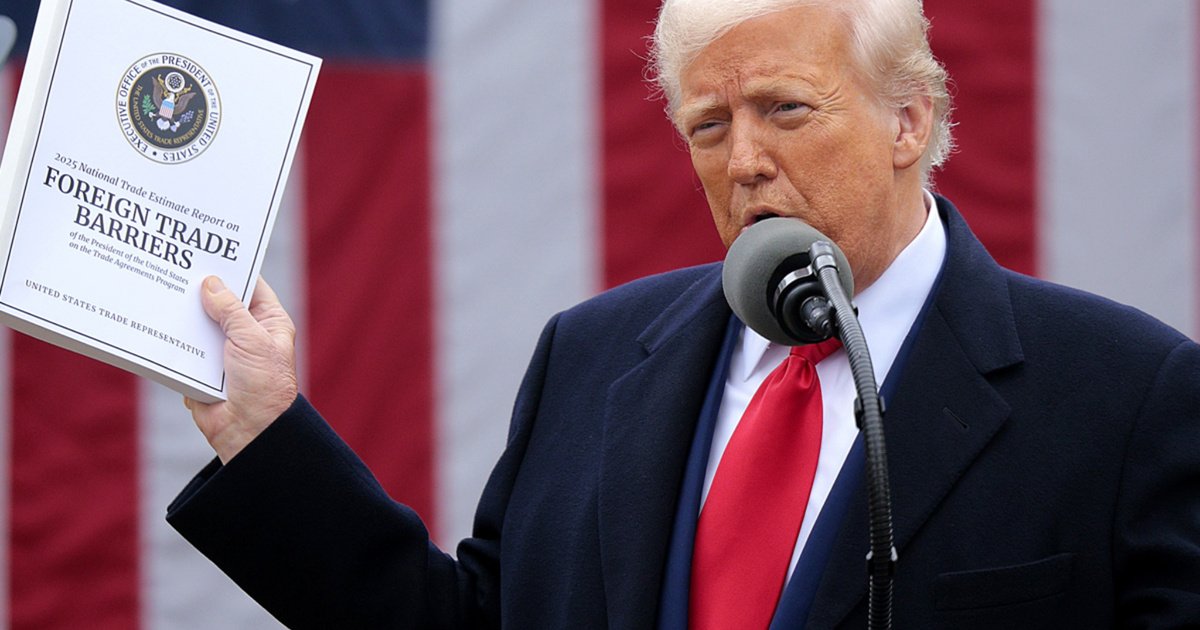
In a decision with sweeping economic and political consequences, the United States Supreme Court on Friday struck down many of former President Donald Trump’s global tariffs, ruling that the emergency law he relied upon does not authorize presidents to impose such sweeping duties.
The 6 to 3 ruling marks one of the most significant judicial checks on Trump’s second term trade strategy, which had leaned heavily on tariffs as both an economic weapon and a foreign policy tool. The decision immediately sent ripples through global markets, trade corridors, and diplomatic circles, raising questions about presidential authority, congressional power, and the future of US trade policy.
A Rare Judicial Setback for Trump’s Trade Agenda
The majority coalition brought together an unusual alignment of justices. Chief Justice John Roberts joined Justices Sonia Sotomayor, Elena Kagan, Neil Gorsuch, Amy Coney Barrett and Ketanji Brown Jackson in striking down the tariffs. Justices Clarence Thomas, Samuel Alito and Brett Kavanaugh dissented.
The ruling is widely viewed as one of the most consequential setbacks for Trump’s trade agenda. During his second term, tariffs had become central to his economic messaging and geopolitical leverage strategy, targeting both adversaries and allies in pursuit of what he described as fairer trade balances and stronger national security protections.
At the center of the case was the International Emergency Economic Powers Act, known as IEEPA, a 1977 statute that grants presidents authority to regulate imports during national emergencies involving national security, foreign policy or economic threats.
Trump had invoked IEEPA to justify sweeping tariffs on nearly every country, citing large and persistent trade deficits and accusing China, Canada and Mexico of failing to stem the flow of illicit fentanyl and other drugs into the United States.
The Supreme Court, however, concluded that the statute does not authorize tariffs.
Why the Court Rejected the Tariff Authority
In a tightly reasoned opinion, the court outlined several core arguments explaining why the emergency law could not be stretched to cover tariff imposition.
The Law Does Not Mention Tariffs
IEEPA authorizes the president to regulate importation during emergencies. However, the statute does not use the words tariff, duty, levy or tax. The majority emphasized that this omission was significant, particularly when dealing with a power that directly affects taxation and revenue.
Chief Justice Roberts wrote that the court’s task was limited but clear. The question was whether the authority to regulate importation under IEEPA includes the authority to impose tariffs. The answer, he stated plainly, was no.
No Historical Precedent
The court noted that before Trump, no president had interpreted IEEPA as granting the authority to impose tariffs. This historical practice, or lack of it, reinforced the majority’s conclusion that Congress never intended the statute to confer such broad fiscal power.
Presidential reliance on IEEPA had traditionally involved measures such as freezing assets, restricting transactions or imposing embargoes, not raising revenue through broad import duties.
Tariffs Are Distinct from Other Emergency Tools
The justices underscored that tariffs operate differently from quotas or embargoes. Unlike restrictions that block or limit imports, tariffs function as revenue generating instruments that operate directly on domestic importers and funnel money into the Treasury.
This distinction proved central to the court’s reasoning. The majority determined that Congress did not intend for an emergency powers statute to serve as a blank check for raising revenue through global duties.
Sweeping Executive Power Was Not Clearly Granted
Under the administration’s interpretation, the president could impose duties of unlimited amount and duration on any product from any country. The court found that such expansive authority over major economic policy must be clearly granted by Congress.
Three conservative justices in the majority, Roberts, Gorsuch and Barrett, applied what is known as the major questions doctrine. This principle holds that when the executive branch claims broad authority over major economic or political issues, Congress must have clearly and explicitly authorized it.
The majority concluded that IEEPA did not meet that standard.
Immediate Economic Fallout and Refund Uncertainty
The financial consequences of the ruling are significant. Analysts estimate that more than 100 billion dollars in tariff revenue may now be subject to refund claims.
The court’s decision opens the door for importers to seek reimbursement. The US Court of International Trade, Customs and Border Protection and the Treasury Department are expected to play central roles in overseeing the process.
Importers are directly eligible to pursue refunds, while other businesses affected by higher costs may attempt to recover losses through litigation. It remains unclear whether consumers who paid higher prices for goods such as furniture, apparel and electronics will have any direct path to compensation.
Economists caution that prices may not fall quickly, even if tariffs are struck down. Businesses that raised prices during the tariff period may keep them elevated amid continued uncertainty and replacement trade actions.
Trump Responds and Signals New Tariff Strategy
Within hours of the ruling, Trump reacted sharply, calling the decision deeply disappointing and criticizing the majority justices in unusually personal terms.
He quickly moved to impose new tariffs under different legal authorities. Announcing a new 10 percent global tariff set to begin February 24, Trump invoked Section 122 of the 1974 Trade Act, a provision that had never previously been used by any president.
He also indicated that further tariffs could be pursued through Section 301 investigations into other countries’ trade practices, signaling that the battle over executive trade powers is far from over.
The rapid pivot demonstrates that while the Supreme Court curtailed one pathway to tariffs, the broader struggle over trade authority will likely continue through alternative statutory frameworks.
India US Trade Deal Remains Unchanged, Trump Says
Amid the domestic fallout, Trump addressed concerns about the ongoing India United States trade deal. He stated that the Supreme Court’s ruling would not affect the arrangement.
According to Trump, under the current deal, India pays tariffs while the United States does not. He described the agreement as a reversal of what he claimed had previously disadvantaged the United States.
He praised Prime Minister Narendra Modi as a strong negotiator but insisted that the revised arrangement now reflects what he considers a fair balance for the United States.
This assurance aims to calm international partners even as legal uncertainty clouds broader tariff policy.
A Defining Moment for Presidential Power
Legal experts describe the ruling as a defining moment in the balance of power between Congress and the presidency. By limiting the executive’s ability to unilaterally impose global tariffs under emergency law, the Supreme Court reaffirmed Congress’s central role in taxation and trade regulation.
The decision also underscores the court’s increasing reliance on the major questions doctrine to scrutinize expansive claims of executive authority.
For businesses, investors and global trading partners, the ruling introduces both relief and uncertainty. Relief because the sweeping tariffs under IEEPA have been invalidated. Uncertainty because the administration has already signaled new trade actions under different laws.
What Comes Next
Lower courts and federal agencies will now grapple with the complex process of implementing the decision. Refund mechanisms must be clarified, legal challenges may proliferate and new tariff measures could face fresh litigation.
For now, the Supreme Court has drawn a clear line. Emergency powers under IEEPA do not include the authority to impose tariffs. Whether Congress chooses to expand that authority explicitly in the future remains to be seen.
In the meantime, the ruling reshapes the legal landscape of American trade policy and stands as one of the most consequential economic decisions of Trump’s second term, with global implications that will unfold in the weeks and months ahead.

Edit Profile
Help improve @KR

Was this page helpful to you?
Contact Khogendra Rupini
Are you looking for an experienced developer to bring your website to life, tackle technical challenges, fix bugs, or enhance functionality? Look no further.
I specialize in building professional, high-performing, and user-friendly websites designed to meet your unique needs. Whether it’s creating custom JavaScript components, solving complex JS problems, or designing responsive layouts that look stunning on both small screens and desktops, I can collaborate with you.
Create something exceptional with us. Contact us today
Open for Collaboration
If you're looking to collaborate, I’m available for a variety of professional services, including -
- Website Design & Development
- Advertisement & Promotion Setup
- Hosting Configuration & Deployment
- Front-end & Back-end Code Implementation
- Code Testing & Optimization
- Cybersecurity Solutions & Threat Prevention
- Website Scanning & Malware Removal
- Hacked Website Recovery
- PHP & MySQL Development
- Python Programming
- Web Content Writing
- Protection Against Hacking Attempts