
The 170 Billion Dollar Question After Supreme Court Strikes Down Trump Tariffs Who Gets the Refunds
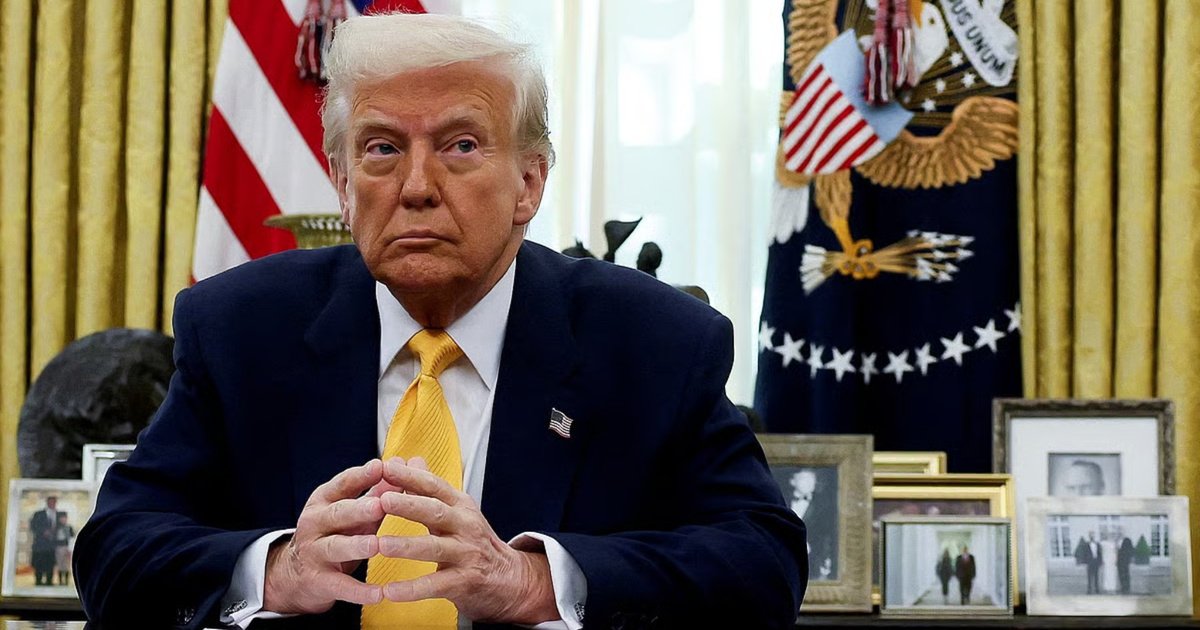
When the United States Supreme Court delivered its landmark decision striking down former President Donald Trump’s sweeping global tariffs, it did more than redraw the limits of presidential trade authority. It opened the door to one of the most complex and consequential financial questions in recent memory. What happens to the estimated 170 billion dollars that American importers paid under those tariffs?
For more than 300,000 businesses across the country, the ruling is not just a constitutional milestone. It is a potential lifeline. Yet despite promises from the Trump administration, no clear path has been laid out for how refunds would be handled, who would qualify, or how long it might take.
A Ruling With Massive Financial Stakes
The Supreme Court’s 6 to 3 decision struck down many of the tariffs imposed under an emergency powers law. The majority held that the Constitution clearly grants Congress the authority to impose taxes, including tariffs. That conclusion directly undercut the legal foundation for Trump’s expansive tariff regime, including reciprocal duties levied on nearly every country.
But while the ruling invalidated the tariffs, the justices stopped short of addressing the practical aftermath.
Justice Brett Kavanaugh acknowledged the enormous financial implications during the hearing. “Refunds of billions of dollars would have significant consequences for the US Treasury,” he wrote. He added that the Court “says nothing today about whether, and if so how, the Government should go about returning the billions of dollars that it has collected from importers.” The process, he noted, is likely to be a “mess,” echoing concerns raised during oral arguments.
In other words, the constitutional question has been answered. The financial one has not.
More Than 300,000 Businesses in Limbo
According to the case record, more than 300,000 businesses are seeking refunds totaling approximately 170 billion dollars. These range from small and midsize importers to large multinational corporations that paid duties on goods sourced from countries targeted under Trump’s trade policies.
Despite detailed government records of tariff payments, the Court did not establish an automatic refund mechanism. That effectively means individual importers may need to file their own lawsuits to seek reimbursement.
Trade attorney Ted Posner, a partner at Baker Botts, told CNN that the issue of refunds was never central to the Supreme Court case. “The case was never about refunds, and it was inconceivable that the Supreme Court would get into the weeds of how you apply refunds,” Posner said.
Instead, the legal battle now shifts to the Court of International Trade. Companies are preparing for what could be a long and highly technical process. “We’re now talking to companies about the next steps, which means more waiting, this time for the Court of International Trade. Any refund process is going to require meticulous submissions, and for now, companies and even countries are left in limbo,” Posner added.
For businesses that have spent years navigating supply chain disruptions and rising costs, the uncertainty adds another layer of financial strain.
Treasury Says Funds Are Available but Timeline Unclear
Treasury Secretary Scott Bessent told Reuters that the department has enough cash on hand to refund importers if required. However, he cautioned that the process could take up to a year.
“It won’t be a problem if we have to do it, but I can tell you that if it happens which I don’t think it’s going to it’s just a corporate boondoggle,” Bessent said.
His remarks underscore the tension between legal obligation and political skepticism. While the administration has both formally and informally promised refunds, it has not provided a detailed roadmap for implementation.
The financial implications for the US Treasury are substantial. A 170 billion dollar outflow would represent one of the largest refund operations in federal history. Even if phased over time, the administrative burden alone would be immense.
History Shows Refunds Can Take Years
This would not be the first time the federal government has been required to issue tariff refunds following a Supreme Court ruling. In 1998, a high court decision resulted in 730 million dollars in refunds to American companies. The process took two years to complete.
That precedent suggests that even if refunds are approved, businesses should brace for a prolonged process involving documentation, audits, and possible litigation. Each claim would likely require verification of payments, confirmation of eligibility, and resolution of any disputes.
The scale today is far larger than in 1998. The dollar amounts are exponentially higher, and the number of affected companies runs into the hundreds of thousands. The administrative and legal complexity could surpass anything seen before in trade litigation.
Political Fallout and Escalating Trade Tensions
The ruling also triggered immediate political fallout. President Trump responded sharply, criticizing the justices who ruled against him and calling them “fools and lapdogs.” At a White House news conference, he described the decision as deeply disappointing and said he was “ashamed of certain members of the Court for not having the courage to do what’s right for our country.”
Despite the setback, Trump insisted that “nothing changes” in the trade deal with India following the verdict. He also announced an additional 10 percent global levy on imports, signaling his determination to continue pursuing aggressive trade measures.
The White House has framed the moment as part of a broader global trade reset. However, the legal limits imposed by the Supreme Court raise significant questions about how far presidential authority can extend without congressional approval.
Economic Impact Beyond Courtrooms
For the broader economy, the uncertainty surrounding refunds could affect corporate planning, investment decisions, and supply chain strategies. Companies that paid substantial duties may have already passed some of those costs on to consumers. If refunds materialize, businesses will face decisions about how to allocate recovered funds.
For small and midsize enterprises, the potential return of tariff payments could provide much needed relief. Yet the need to file individual claims or lawsuits may discourage some from pursuing reimbursement, especially if legal costs are high.
Meanwhile, global trading partners are closely watching the situation. The Supreme Court’s decision reshapes the balance of trade authority between Congress and the executive branch. It could influence how future administrations approach tariffs and emergency economic powers.
The 170 Billion Dollar Waiting Game
At its core, the issue now is not about ideology but logistics. Who files first. How claims are processed. Whether interest will be paid. How disputes are resolved. And how long businesses must wait.
The Supreme Court has closed one chapter in the tariff saga by clarifying constitutional authority. But it deliberately left the refund question open.
For more than 300,000 businesses, that unanswered question is far from academic. It is a matter of survival, cash flow, and fairness. The Treasury says it has the funds. Legal experts say the process will be complex. History suggests patience will be required.
Until clear guidelines emerge, companies remain in limbo. The 170 billion dollar question continues to hang over Washington, Wall Street, and Main Street alike.
In the wake of a historic ruling, the constitutional debate may be settled. The financial reckoning has only just begun.

Edit Profile
Help improve @KR

Was this page helpful to you?
Contact Khogendra Rupini
Are you looking for an experienced developer to bring your website to life, tackle technical challenges, fix bugs, or enhance functionality? Look no further.
I specialize in building professional, high-performing, and user-friendly websites designed to meet your unique needs. Whether it’s creating custom JavaScript components, solving complex JS problems, or designing responsive layouts that look stunning on both small screens and desktops, I can collaborate with you.
Create something exceptional with us. Contact us today
Open for Collaboration
If you're looking to collaborate, I’m available for a variety of professional services, including -
- Website Design & Development
- Advertisement & Promotion Setup
- Hosting Configuration & Deployment
- Front-end & Back-end Code Implementation
- Code Testing & Optimization
- Cybersecurity Solutions & Threat Prevention
- Website Scanning & Malware Removal
- Hacked Website Recovery
- PHP & MySQL Development
- Python Programming
- Web Content Writing
- Protection Against Hacking Attempts