Sundar Pichai Confronts the 'Boo Strategy' Question as AI Anxiety Grips America's Graduating Class and the Nation's Most Promising Young Minds Fear the Future They Were Promised Is Quietly Being Taken Away
In the spring of 2026, something unusual began happening at America's most prestigious university commencement ceremonies. Graduates, draped in caps and gowns and clutching their hard-earned degrees, started booing. Not at their institutions. Not at political figures. They booed the men who built the machines that may soon replace them.
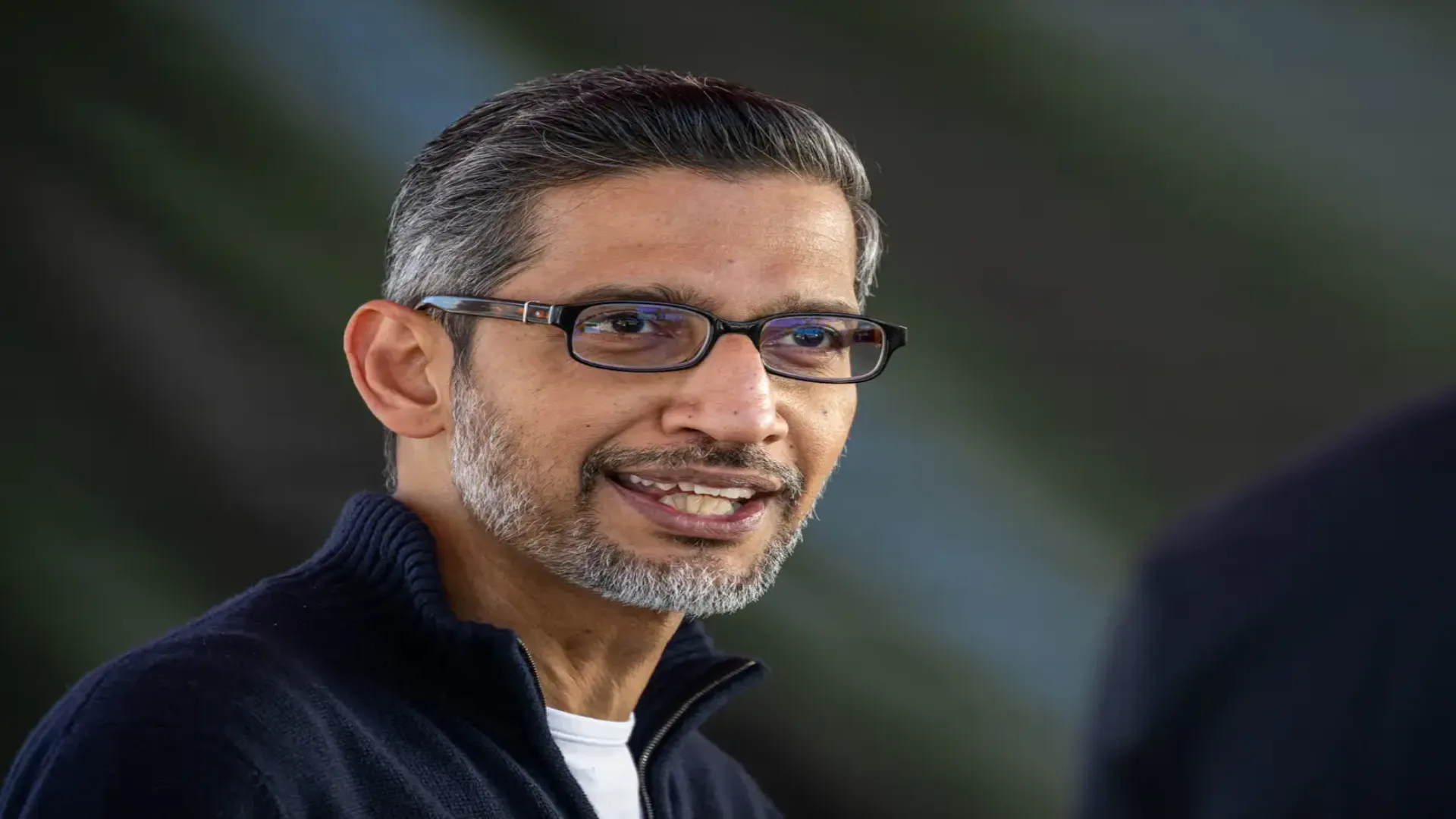
This is the uncomfortable, deeply human story at the center of one of the most consequential technological transitions in modern history. And it is the story that Google CEO Sundar Pichai will have to walk into when he takes the podium at Stanford University next month.
A New Kind of Risk for the C-Suite: The Commencement Boo
The corporate world is no stranger to hostile audiences. Earnings calls go sideways. Shareholders revolt. Employee town halls turn tense. But the image of a Fortune 500 chief executive being jeered by mortarboard-wearing twenty-two-year-olds is something altogether different. It is, in many ways, the most honest signal the technology industry has received in years.
When former Google CEO Eric Schmidt delivered a commencement address at the University of Arizona this spring, students booed him. When Scott Borchetta, the CEO of Big Machine Records, stood before graduates at Middle Tennessee State University and began talking optimistically about artificial intelligence and its impact on music and the entertainment industry, the crowd turned on him too.
The backlash was not spontaneous rudeness. It was grief, dressed in academic regalia.
These moments were dramatic enough that the hosts of the influential technology podcast Hard Fork decided to put the question directly to Sundar Pichai, the current CEO of Google and one of the most prominent faces of the AI era. They asked him, pointedly, what his boo strategy would be when he takes the stage at Stanford.
It is, without question, a strange question to be asking a sitting chief executive of one of the world's most valuable companies. It is also, in the context of 2026, an entirely reasonable one.
The Weight Pichai Carries to That Podium
Sundar Pichai is not a peripheral figure in the AI story. He is, alongside a small group of technology leaders, one of its central architects. Under his leadership, Google has poured billions of dollars into artificial intelligence research, deployed AI tools across its most widely used products, and positioned the company as an indispensable force in what the industry calls the next technological revolution.
That makes his commencement speech at Stanford something more than a ceremonial obligation. It makes it a reckoning.
Pichai acknowledged this tension without flinching. Speaking to the Hard Fork hosts, he said that the graduating class he is about to address is not a passive observer of the AI transition. These are the people, he said, who will both drive that progress forward and live with its consequences. They are not bystanders. They are inheritors.
"I have always been extraordinarily optimistic about the next generation," Pichai told the podcast. He did not retreat from that optimism, but he also did not pretend the anxiety is irrational. He acknowledged directly that people are rightfully anxious about the kind of future artificial intelligence will create. He then said something that stood out for its candour: "Humans aren't evolved to process that much change."
That is a remarkable thing for the leader of an AI-driving company to say. It is an acknowledgement not just of economic disruption, but of something deeper and psychological. The pace of change that AI has introduced into daily life is not normal. It is not something human beings were designed, evolutionarily or culturally, to absorb smoothly. And the people sitting in those graduation chairs, young people who spent four years training for a particular kind of professional future, are feeling that in their bones.
His stated goal for the Stanford speech is modest and, in a way, disarming. He said he wants to share his own experiences. Not forecasts. Not data. Not reassurances about job growth projections. His own story. Whether that will be enough to hold the room remains to be seen.
What the Numbers Actually Say About AI and Young Workers
To understand why graduates are so angry, it is worth stepping outside the speeches and looking at the data that frames their lives as they prepare to enter the workforce.
The unemployment rate for new graduates reached a four-year high at the start of 2026. That figure alone is striking. But the texture of the problem goes further. Artificial intelligence has not just been reducing job openings in certain sectors. It has made the act of job-seeking itself more difficult and more exhausting. AI-powered screening tools have extended the interview process, adding rounds of assessments, automated evaluations, and algorithmic filtering that can stretch what was once a weeks-long process into months of uncertainty for applicants.
At least a dozen major companies have publicly cited increased AI-driven efficiency as a contributing factor in decisions to reduce their workforces this year. These are not rumours or speculation. These are corporate disclosures, made in earnings calls and press releases, that explicitly connect the technology to layoffs.
Meanwhile, a Pew Research Center study found that approximately half of Americans said the growing presence of AI in their daily lives left them feeling more concerned than excited. The survey did not capture a fringe view. It captured the centre of public sentiment.
Across the country, communities are resisting the construction of new data centres, the enormous facilities that house the computing infrastructure that powers AI products. These are not abstract policy debates. They are local fights, in towns and counties where residents are weighing the promise of economic development against concerns about water usage, energy consumption, and the sense that something vast and poorly understood is being built in their backyards without their meaningful consent.
This is the landscape Pichai will walk into at Stanford.
Why Stanford May Be Different, and Why That Is Not Entirely Comforting
The Hard Fork hosts and analysts who have followed Pichai's prepared remarks have noted that Stanford may offer a more receptive audience than the universities where Schmidt and Borchetta were booed. Stanford sits in the geographical and intellectual heart of Silicon Valley. Its graduates include some of the founders and early employees of the very companies driving the AI boom. The university has been home to some of the most talked-about artificial intelligence courses in the country this year, drawing guest speakers from the highest levels of the industry.
It is entirely plausible that Stanford's graduating class of 2026 will listen respectfully to Pichai, that many of them will nod along, and that a portion of them are already working on AI products or plan to build their careers around the technology. The hostility that erupted at Arizona and Middle Tennessee may not materialise in Palo Alto.
But that is not the same as saying the anxiety does not exist at Stanford. It simply may wear a different face there. Among elite university graduates entering the AI industry, the concern is not always about being replaced. It is sometimes about complicity. About what it means to build systems whose consequences you cannot fully control or predict. About whether the optimism that Silicon Valley sells is honest, or whether it is a form of self-interest dressed in the language of human progress.
Pichai's comment that these graduates will live with the consequences of AI is, in that sense, a burden as much as an invitation. The consequences are not a future event. For many of these young people, they are already here.
Jensen Huang and the Industry's Counter-Narrative
Pichai is not the only technology leader navigating this terrain. Earlier this month, Nvidia CEO Jensen Huang delivered the commencement address at Carnegie Mellon University, one of the country's leading technical universities. His message was direct and unapologetic: artificial intelligence will be a net positive for humanity, including for people who are just now beginning their careers.
Huang has been one of the most bullish voices in the industry, a position made somewhat easier by the fact that Nvidia, as the primary supplier of AI chips, has been perhaps the single greatest financial beneficiary of the AI investment boom. The argument that AI creates more than it destroys is not unique to him, but he made it with characteristic confidence at Carnegie Mellon.
That argument has merit. Historical precedent, from the industrial revolution to the rise of the internet, does suggest that transformative technologies ultimately generate new categories of work even as they eliminate others. But the timeline of that argument is cold comfort to someone holding a diploma and wondering whether the job they trained for will still exist in three years. There is a morally significant gap between a CEO's thirty-year economic horizon and a graduate's three-month job search. The booing, in that sense, is not anti-progress. It is a demand for a more honest accounting of who pays the transition costs and when relief actually arrives.
What an Honest AI Speech to Graduates Would Actually Say
The commencement speech has always been a peculiar genre. It is expected to be inspiring without being naive, honest without being demoralising, specific without being exclusionary. In the age of AI, that balance has become exponentially harder to strike.
Pichai's approach of sharing his experiences rather than making promises may be the most defensible strategy available to him. What technology leaders almost certainly cannot afford to do, if they want to be taken seriously by this generation, is to perform uncomplicated optimism. The data is too visible. The layoffs are too recent. The anxiety is too real.
What graduates seem to be asking for is not reassurance. They are asking for acknowledgement. They want to hear, from the people who built these systems, that the disruption is real. That the anxiety is earned. That the people in power are not indifferent to the human cost of the transition they are driving.
Pichai's own words in the Hard Fork interview suggest he understands this, at least in part. Acknowledging that people are rightfully worried, that humans were not built to absorb change at this scale, is more honest than the average technology keynote. Whether he can translate that candour into an address that is both truthful and generative, without triggering the backlash that met his predecessor, will be one of the more closely watched public moments in tech this summer.
The Graduates Who Will Shape What AI Actually Becomes
There is a dimension to this story that often gets lost in the framing of anxiety versus optimism. The graduates who are booing AI and the graduates who are building it are not two separate populations. They are, in many cases, the same people. The student who fears that AI will hollow out her profession and the student writing AI code in his dorm room are both members of the class of 2026.
Pichai is right about one thing: this generation will determine what the technology actually becomes. Not in the abstract, but through millions of specific decisions made over careers that have not yet fully started. Which applications to build. Which deployments to question. Which uses to refuse. What data to protect. How to design systems that serve people rather than simply replace them.
Those decisions will not be made by the people on the commencement stage. They will be made by the people in the folding chairs. And the fact that so many of those people are arriving at their careers with serious, grounded, economically literate scepticism about artificial intelligence may, in the very long run, be the most important check on its worst tendencies.
The boos, in other words, may be doing exactly what democratic voice is supposed to do. They are telling power that it is being watched. That the people who must live with these choices are paying attention. And that optimism, to be credible, must eventually be backed by evidence.
When Sundar Pichai stands before Stanford's graduating class, he will not be facing critics. He will be facing the people who will decide whether the future he has spent his career building is worth believing in. That is not a hostile crowd. It is a demanding one. And in 2026, that distinction matters more than ever.
Frequently Asked Questions
Why are college graduates booing tech CEOs at commencement speeches in 2026?
Graduates are expressing real anxiety about artificial intelligence eliminating jobs they trained for. The booing reflects frustration that tech leaders promote AI optimism while new graduate unemployment has reached a four-year high.
What is Sundar Pichai's boo strategy for the Stanford commencement speech?
Pichai said his approach is to share personal experiences rather than make promises or present data. He acknowledged that people are rightfully anxious about AI and that humans are not built to process change at this scale.
Who was booed at commencement ceremonies and where did it happen?
Former Google CEO Eric Schmidt was booed at the University of Arizona. Big Machine Records CEO Scott Borchetta faced backlash at Middle Tennessee State University after making optimistic comments about AI's impact on music and media.
How has artificial intelligence affected the job market for new graduates in 2026?
New graduate unemployment reached a four-year high at the start of 2026. AI has also prolonged the hiring process through automated screening tools, and at least a dozen major companies have cited AI-driven efficiency as a reason for workforce reductions this year.
What did the Pew Research Center find about American attitudes toward AI?
A Pew Research Center study found that approximately half of Americans feel more concerned than excited about the growing presence of artificial intelligence in their daily lives.
Why might Stanford graduates respond differently to Pichai compared to other universities?
Stanford is located in Silicon Valley and is home to some of the most prominent AI courses in the country. Many of its graduates are already working in or planning careers around AI, which may make the audience more receptive to Pichai's message.
What did Jensen Huang say about AI at Carnegie Mellon University's 2026 commencement?
Nvidia CEO Jensen Huang argued at Carnegie Mellon that artificial intelligence will be a net positive for humanity, including for people who are just beginning their careers.
Why are communities across America resisting new AI data centres?
Residents in various towns and counties are raising concerns about water usage, energy consumption, and noise. Many feel these large infrastructure projects are being built without their meaningful input or consent.
Edit Profile
Help improve @KR
Was this page helpful to you?
Contact Khogendra Rupini
Are you looking for an experienced developer to bring your website to life, tackle technical challenges, fix bugs, or enhance functionality? Look no further.
I specialize in building professional, high-performing, and user-friendly websites designed to meet your unique needs. Whether it's creating custom JavaScript components, solving complex JS problems, or designing responsive layouts that look stunning on both small screens and desktops, I can collaborate with you.
Create something exceptional with us. Contact us today
Open for Collaboration
If you're looking to collaborate, I'm available for a variety of professional services, including -
- Website Design & Development
- Advertisement & Promotion Setup
- Hosting Configuration & Deployment
- Front-end & Back-end Code Implementation
- Code Testing & Optimization
- Cybersecurity Solutions & Threat Prevention
- Website Scanning & Malware Removal
- Hacked Website Recovery
- PHP & MySQL Development
- Python Programming
- Web Content Writing
- Protection Against Hacking Attempts