
A Surprising Shift in Tone From a Challenger to Google
info Synopsis: Perplexity AI CEO Aravind Srinivas admits Google still leads in navigational search, as the company launches its Comet browser on iOS with Google as default. The move highlights a hybrid strategy blending Google’s speed with Perplexity’s AI for deeper, smarter search experiences.
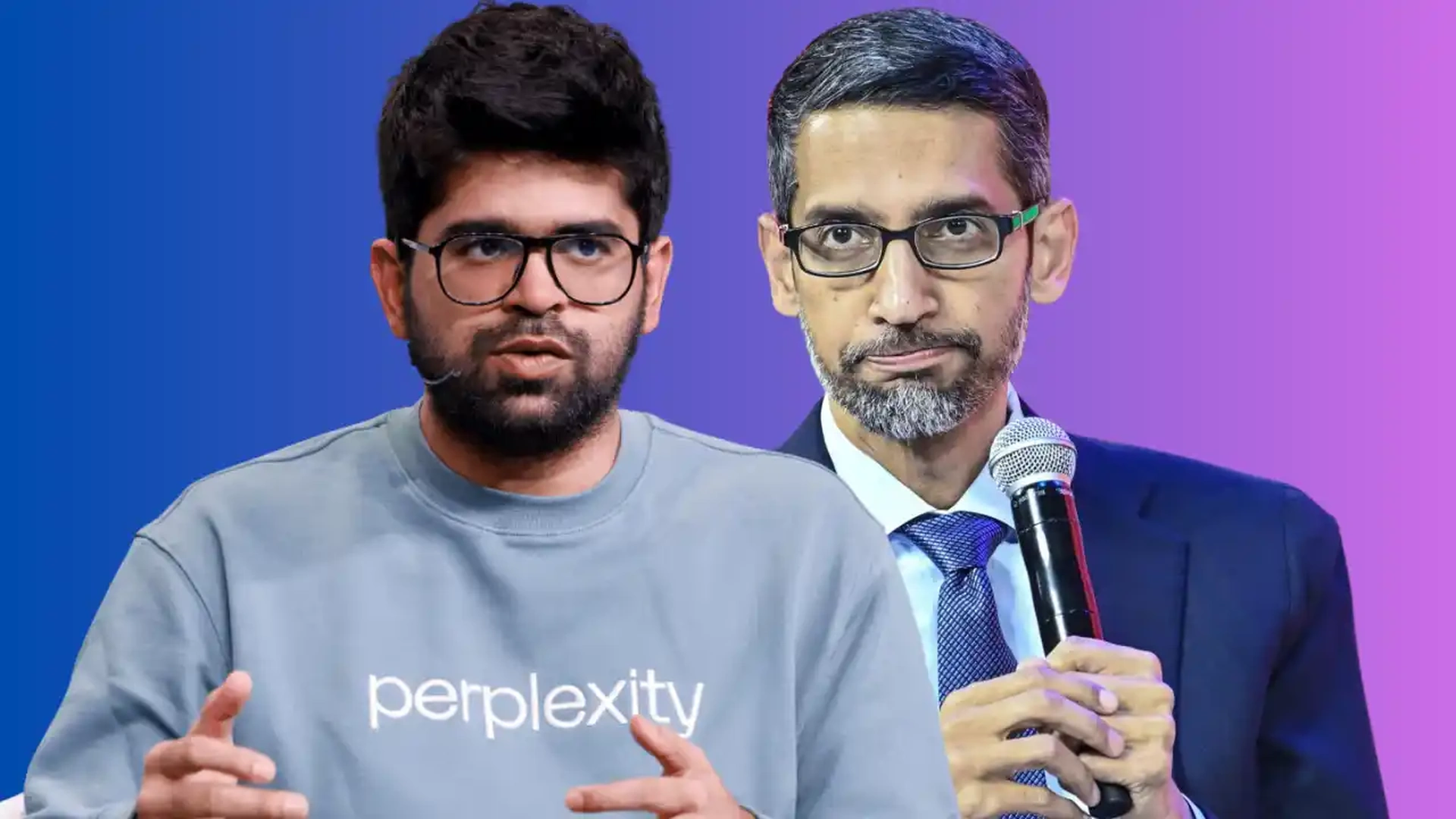
In a striking moment of candor, Aravind Srinivas, the chief executive of Perplexity AI, has publicly acknowledged that Google continues to outperform every competitor in one of the most critical areas of the internet economy: search.
The statement comes months after Srinivas made headlines for offering an eye-popping $34.5 billion to acquire Google’s Chrome browser, a proposal that was nearly double Perplexity’s own valuation at the time. While that bid ultimately failed, his latest remarks suggest a pragmatic shift rather than a retreat.
Posting on X, Srinivas admitted that “Google does a much better job here than anyone else in the world,” specifically referring to navigational queries. These include everyday searches such as locating nearby restaurants, checking live sports scores, or browsing hotel deals—tasks that dominate mobile user behavior globally.
Navigational Search: Google’s Unmatched Stronghold
Srinivas’s comments highlight a crucial distinction in the evolving search landscape. While artificial intelligence driven platforms like Perplexity are gaining traction for complex queries and conversational answers, traditional search engines still dominate quick, intent driven lookups.
Navigational searches require speed, accuracy, and deep integration with real world data sources. Google’s decades long investment in indexing, mapping, and vertical search services has created a system that remains difficult to rival.
By openly recognizing this gap, Srinivas is signaling a strategic understanding of where Perplexity stands today. Rather than attempting to replace Google entirely, the company appears to be focusing on complementing it.
Comet Browser Strategy Blends Google Strength With AI Capabilities
The timing of Srinivas’s remarks coincides with the launch of Perplexity’s Comet browser on iOS. Unlike its desktop counterpart, the iPhone version defaults to Google Search for navigational queries.
This decision reflects a hybrid approach. Comet leverages Google’s strengths in speed and breadth while layering Perplexity’s AI powered features on top. The result is a browser that does not attempt to reinvent the wheel for routine searches but enhances the experience when deeper understanding is required.
The Comet Assistant is central to this strategy. It operates across webpages, including Google search results, allowing users to transition seamlessly from traditional search to AI generated insights. Whether summarizing content, answering follow up questions, or enabling multimodal interactions, the assistant is designed to step in when conventional search reaches its limits.
Voice mode integration further strengthens the user experience, aligning with the growing trend toward conversational interfaces.
From Bold Acquisition Attempt to Pragmatic Product Vision
The contrast between Srinivas’s earlier Chrome acquisition attempt and his current stance is notable. In August 2025, he sent a letter to Sundar Pichai proposing a multibillion dollar deal to acquire Chrome, one of the most widely used browsers in the world.
However, the proposal never materialized. In September 2025, a US district court ruled that Google would not be required to divest Chrome or Android, effectively closing the door on such possibilities.
Rather than slowing down, Perplexity shifted its focus to building its own ecosystem. The Comet browser has since expanded across multiple platforms including iPhone, Android, Windows, and Mac. While a native iPad version remains absent, the broader rollout signals the company’s ambition to compete across devices.
Built on Chromium but Focused on User Experience
Technically, Comet is built on Chromium, the same open source engine that powers Chrome, Microsoft Edge, and several other browsers. This foundation ensures compatibility and performance stability while allowing Perplexity to innovate at the interface level.
Srinivas has emphasized that Comet’s design is native in feel, particularly on iOS, where it aims to match the polish associated with Apple’s Safari browser. Features such as built in ad blocking and background video playback add to its appeal, positioning it as a modern alternative in a crowded browser market.
Yet, what differentiates Comet is not just its features but its philosophy. It does not seek to replace Google outright but to coexist with it, stepping in where AI can add meaningful value.
Redefining Competition in the AI Search Era
Srinivas’s acknowledgment of Google’s superiority in certain areas reflects a broader trend in the tech industry. The narrative is shifting from direct competition to strategic coexistence.
AI driven platforms are not necessarily replacing traditional search engines but are instead redefining how users interact with information. Complex queries, research tasks, and contextual understanding are becoming the domain of AI, while quick lookups remain firmly in Google’s territory.
This division of labor may ultimately benefit users. By combining the strengths of both approaches, products like Comet aim to deliver a more holistic browsing experience.
Why This Admission Matters
For a CEO who once attempted to acquire a core piece of Google’s ecosystem, publicly praising the company’s capabilities is significant. It signals maturity, realism, and a willingness to adapt strategy based on actual user behavior.
Rather than positioning Perplexity as a “Google killer,” Srinivas is reframing it as a complementary tool. This approach may resonate more with users who are not looking to abandon familiar systems but are open to enhancements.
It also underscores a key truth in the technology sector: dominance in one area does not guarantee supremacy across all fronts. Even as AI reshapes the search landscape, Google’s foundational strengths remain formidable.
The Road Ahead for Perplexity and Search Innovation
As Perplexity continues to expand its product lineup, the success of Comet will depend on how effectively it balances integration with differentiation.
The company’s ability to deliver high quality AI responses, seamless user experience, and meaningful enhancements over traditional search will determine its long term relevance.
At the same time, Google is unlikely to remain static. With its own advancements in AI and search integration, the competition is expected to intensify.
Conclusion: Pragmatism Over Hype in the Next Phase of Search
Aravind Srinivas’s remarks mark a pivotal moment in the evolving narrative of AI versus traditional search. By acknowledging Google’s continued dominance in navigational queries, he is setting a more grounded expectation for what AI driven platforms can realistically achieve today.
The launch of Comet reflects this balanced vision. It is not about replacing Google but about working alongside it, enhancing the browsing experience where AI can make a difference.
In an industry often driven by bold claims and aggressive positioning, this pragmatic approach may prove to be Perplexity’s most strategic move yet.
Edit Profile
Help improve @KR
Was this page helpful to you?
Contact Khogendra Rupini
Are you looking for an experienced developer to bring your website to life, tackle technical challenges, fix bugs, or enhance functionality? Look no further.
I specialize in building professional, high-performing, and user-friendly websites designed to meet your unique needs. Whether it’s creating custom JavaScript components, solving complex JS problems, or designing responsive layouts that look stunning on both small screens and desktops, I can collaborate with you.
Create something exceptional with us. Contact us today
Open for Collaboration
If you're looking to collaborate, I’m available for a variety of professional services, including -
- Website Design & Development
- Advertisement & Promotion Setup
- Hosting Configuration & Deployment
- Front-end & Back-end Code Implementation
- Code Testing & Optimization
- Cybersecurity Solutions & Threat Prevention
- Website Scanning & Malware Removal
- Hacked Website Recovery
- PHP & MySQL Development
- Python Programming
- Web Content Writing
- Protection Against Hacking Attempts