
Windows 11 Set for Major Performance Comeback in 2026 as Microsoft Targets Speed, Stability, and Lower RAM Usage
info Synopsis: Microsoft plans a major Windows 11 overhaul in 2026, targeting lower RAM usage, faster performance, improved UI responsiveness, better File Explorer and search, and fewer crashes. The update aims to fix long-standing issues and restore user trust amid rising competition and evolving hardware.
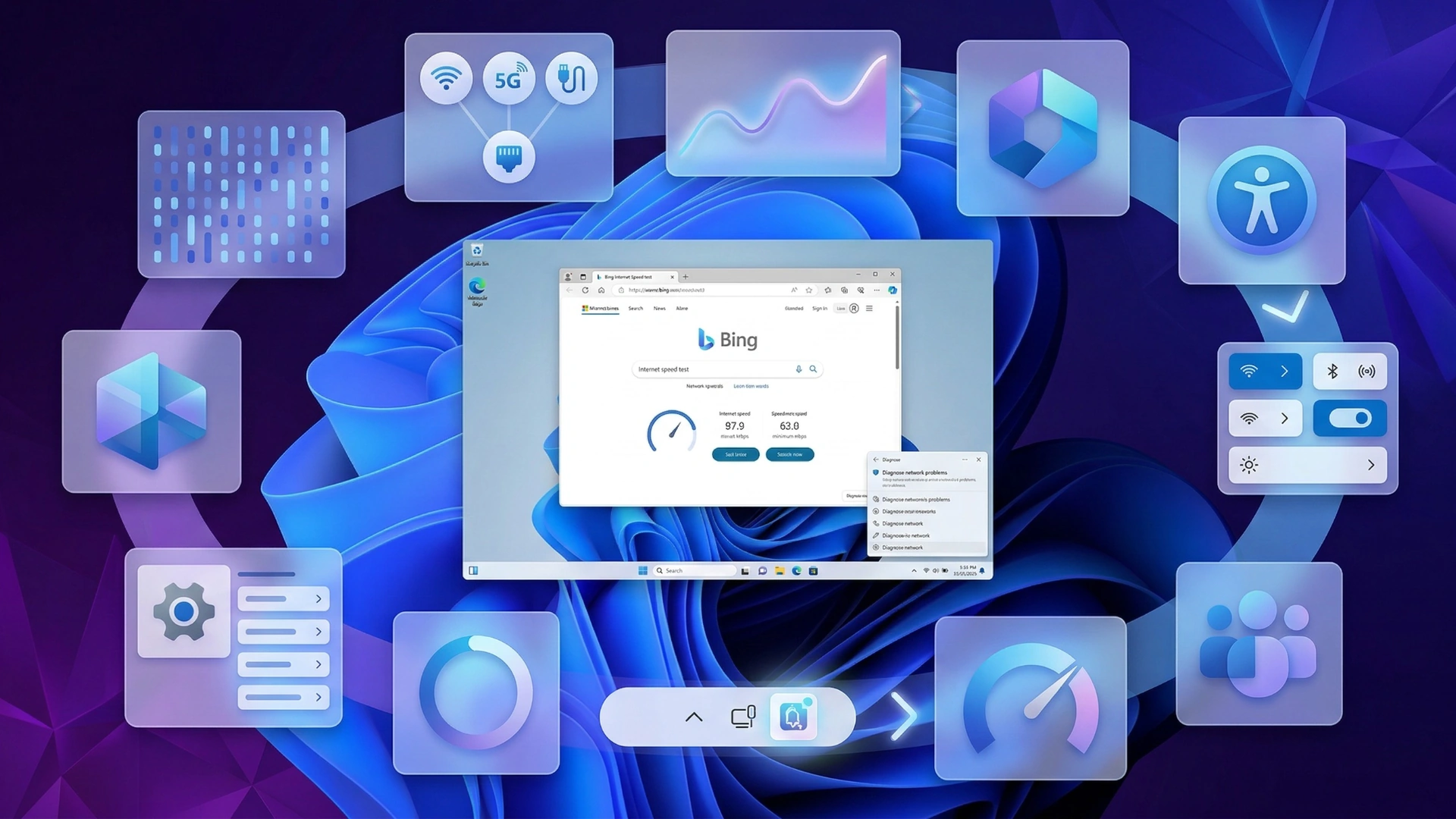
A long-awaited shift toward performance fundamentals signals a turning point for Windows
After months of growing criticism around sluggish performance, high memory consumption, and inconsistent user experience, Microsoft has finally outlined a comprehensive plan to overhaul Windows 11 in 2026. The announcement marks one of the most significant strategic resets for the operating system in recent years, with a renewed focus on speed, responsiveness, and reliability.
The move comes at a critical time. Increasing competition from Apple’s tightly optimized ecosystem, combined with rising user expectations and viral social media criticism, has placed Windows under intense scrutiny. While some claims circulating online have been exaggerated, the broader sentiment reflects genuine frustration among users who expect modern systems to feel fast and efficient across all hardware tiers.
Now, Microsoft appears ready to address those concerns head-on, with a structured roadmap that prioritizes real-world performance improvements over feature expansion.
Microsoft acknowledges performance concerns and outlines a detailed recovery plan
In a recent official communication focused on Windows quality, Microsoft presented a clear and actionable strategy to resolve long-standing issues affecting Windows 11. Unlike previous announcements that focused on isolated enhancements, this plan addresses core system behavior across multiple layers of the operating system.
The company’s leadership has also publicly acknowledged the need for meaningful improvements. This shift in tone reflects a broader internal realization that incremental updates are no longer sufficient to meet user expectations.
The new roadmap emphasizes measurable gains in system responsiveness, reduced latency, improved stability, and better resource management. Early reactions from developers and industry observers suggest cautious optimism, especially given the depth of the proposed changes.
Lower RAM usage aims to unlock better performance across all devices
One of the most critical areas of improvement is memory usage. Windows 11 has faced consistent criticism for its high baseline RAM consumption, particularly on systems with 8GB of memory, where the operating system often occupies a significant portion of available resources even at idle.
Microsoft now plans to reduce the core memory footprint of Windows 11. This means the system will consume less RAM in the background, allowing applications to access more resources and improving multitasking performance.
Currently, many systems experience disproportionately high idle memory usage, which can lead to slowdowns when switching between apps or performing everyday tasks. By optimizing how memory is allocated and managed, Microsoft aims to deliver a more consistent experience, even under heavy workloads.
Although the company has not disclosed the exact technical mechanisms behind these optimizations, the expected outcome is clear: smoother performance, especially on mid-range and entry-level devices.
Transition to modern UI architecture promises faster and more consistent interactions
Another major change involves reducing user interface latency by transitioning more system components to a modern native framework. Windows 11 currently relies on a hybrid architecture that combines legacy elements with newer technologies, including web-based layers.
While this approach offers flexibility, it also introduces delays between user input and visual response. This is why certain parts of the system feel immediate, while others appear slightly laggy, even on powerful machines.
By shifting toward a more unified native framework, Microsoft aims to eliminate these inconsistencies. Core features such as the Start menu and system interfaces are expected to become significantly more responsive, with smoother animations and quicker feedback.
This transition is not just about visual polish. It represents a deeper effort to streamline how the operating system processes interactions, ultimately making everyday usage feel faster and more intuitive.
File Explorer improvements target one of the most criticized components
File Explorer, a central part of the Windows experience for decades, has also been a frequent source of user frustration in Windows 11. Despite previous attempts to improve launch times through preloading techniques, performance has remained inconsistent compared to earlier versions.
Microsoft is now focusing on reducing delays across navigation, search, and context menu interactions within File Explorer. Additionally, improvements are being made to file operations such as copying and moving large data sets, which are critical for both professional and everyday use.
The goal is to make File Explorer not only faster to open but also more reliable during intensive tasks. This renewed attention to a foundational tool signals a return to prioritizing core usability, something many long-time users have been demanding.
Windows Search set to become faster, clearer, and more reliable
Search functionality is another area undergoing significant refinement. Over time, Windows Search has developed a reputation for delivering inconsistent results, often blending local queries with web suggestions in ways that confuse users.
Microsoft plans to improve both the accuracy and clarity of search results across the system, including the Start menu, taskbar, File Explorer, and settings.
The updated experience will aim to clearly distinguish between local results and web content, ensuring that users can quickly find installed applications, files, and system settings without unnecessary distractions.
This change is expected to enhance productivity and reduce friction in everyday tasks, particularly for users who rely heavily on search to navigate their systems.
Stability improvements aim to reduce crashes and improve hardware compatibility
Beyond performance, Microsoft is also addressing system reliability. Windows has long faced challenges due to the vast diversity of hardware configurations it supports, which can lead to driver inconsistencies and unexpected crashes.
The 2026 roadmap includes targeted efforts to improve driver quality and reduce operating system level failures. This includes better support for common components such as Bluetooth devices, USB connections, cameras, and audio systems.
Improvements are also being made to device wake behavior, especially in setups involving external docks, where reliability issues have been particularly noticeable.
By strengthening these foundational aspects, Microsoft aims to deliver a more dependable experience across a wide range of devices, from budget laptops to high-end workstations.
A familiar pattern as Microsoft returns to its roots of refinement
Industry observers have noted that this situation mirrors previous moments in Windows history. Earlier versions that faced criticism were often followed by refined and widely successful releases that focused on stability and usability.
This pattern suggests that Microsoft performs best when it prioritizes core functionality over experimental changes. The current strategy appears to follow that same philosophy, emphasizing practical improvements that directly impact users.
If executed effectively, this approach could restore confidence in Windows as a reliable and efficient platform.
Hardware advancements and competition add urgency to Microsoft’s efforts
At the same time, the broader computing landscape is evolving rapidly. New processor architectures from major chip manufacturers are pushing performance and efficiency forward, while ARM-based systems continue to gain traction.
Competition from Apple has also intensified, particularly with the introduction of more affordable devices that deliver strong performance and battery life. This has raised expectations for what users should receive at similar price points in the Windows ecosystem.
As a result, Microsoft is not only improving its software but also aligning with a new generation of hardware that is more capable and efficient. This convergence creates an opportunity to redefine the Windows experience in a meaningful way.
2026 could mark a defining moment for Windows
Taken together, these changes represent more than just another update cycle. They signal a broader shift in priorities, one that places performance, consistency, and reliability at the center of the Windows experience.
For years, users have called for a return to fundamentals. Now, Microsoft appears to be responding with a plan that addresses those concerns directly.
If the company delivers on its promises, 2026 could become a landmark year for Windows, redefining how the operating system performs across devices and rebuilding trust among its global user base.
At its core, the expectation is simple. Users want an operating system that feels fast, stable, and dependable. For the first time in a while, it seems Microsoft is fully aligned with that vision.

Edit Profile
Help improve @KR

Was this page helpful to you?
Contact Khogendra Rupini
Are you looking for an experienced developer to bring your website to life, tackle technical challenges, fix bugs, or enhance functionality? Look no further.
I specialize in building professional, high-performing, and user-friendly websites designed to meet your unique needs. Whether it’s creating custom JavaScript components, solving complex JS problems, or designing responsive layouts that look stunning on both small screens and desktops, I can collaborate with you.
Create something exceptional with us. Contact us today
Open for Collaboration
If you're looking to collaborate, I’m available for a variety of professional services, including -
- Website Design & Development
- Advertisement & Promotion Setup
- Hosting Configuration & Deployment
- Front-end & Back-end Code Implementation
- Code Testing & Optimization
- Cybersecurity Solutions & Threat Prevention
- Website Scanning & Malware Removal
- Hacked Website Recovery
- PHP & MySQL Development
- Python Programming
- Web Content Writing
- Protection Against Hacking Attempts