
Middle East War Escalates After Killing of Iran’s Supreme Leader as Missiles, Drones and Oil Disruptions Shake Global Economy
info Major tensions are spreading across the Middle East after US and Israeli strikes killed Iran’s Supreme Leader Ali Khamenei, triggering missile attacks, drone strikes and threats to global oil routes through the Strait of Hormuz as fears grow of a wider regional war.
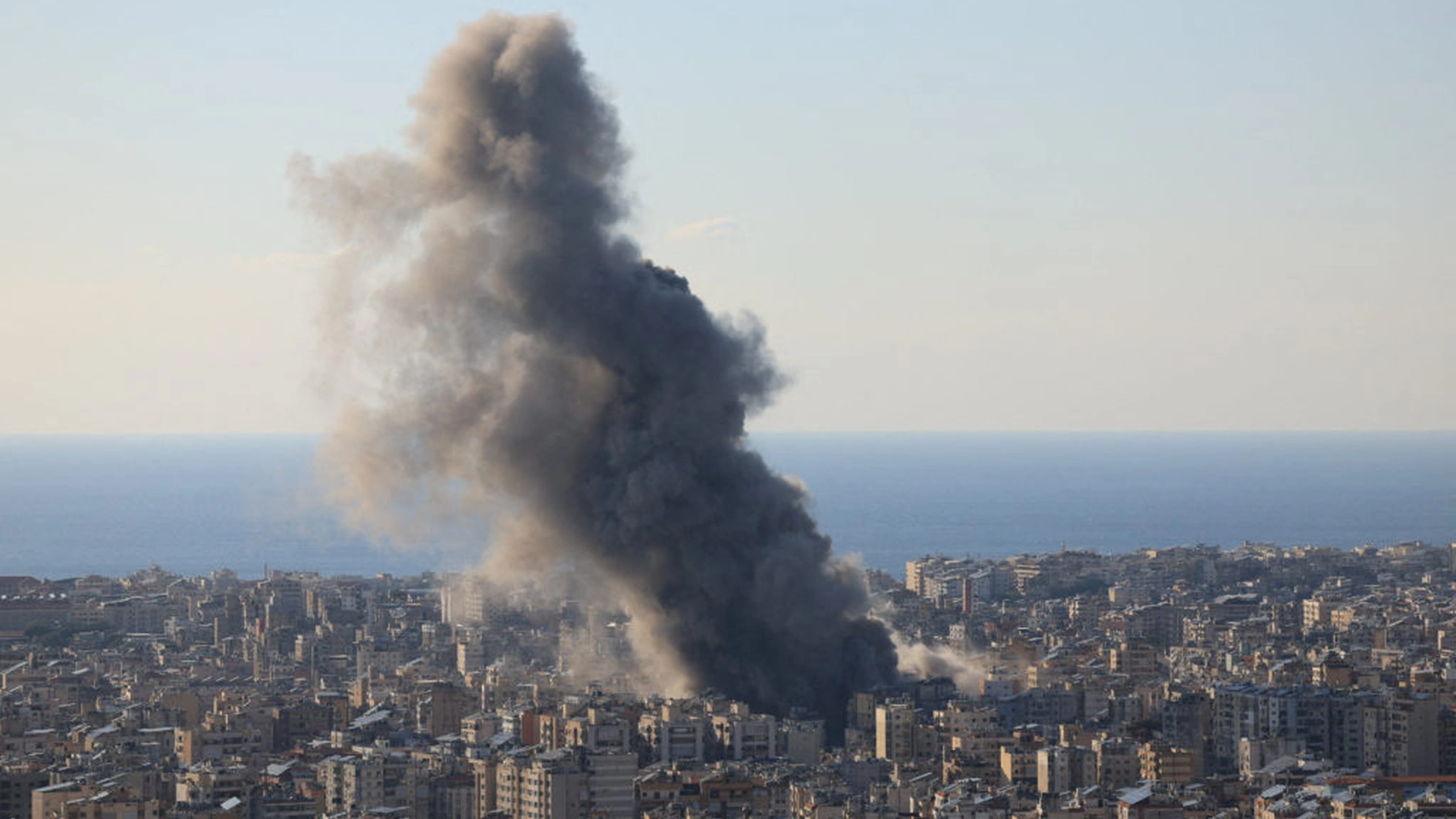
The conflict between the United States, Israel and Iran has rapidly transformed into one of the most dangerous geopolitical crises in recent years, triggering military escalation across the Middle East and sending shockwaves through global energy markets. What began as a coordinated strike has now expanded into a multi country confrontation involving missile attacks, naval incidents and growing fears of economic disruption worldwide.
War Ignites After US and Israeli Airstrikes Kill Iran’s Supreme Leader
The war erupted on February 28 after coordinated airstrikes by the United States and Israel targeted military installations across Iran. The strikes killed Iran’s Supreme Leader Ali Khamenei and several senior officials, a development that immediately escalated tensions and triggered retaliatory operations by Tehran.
Iran responded with waves of ballistic missiles and drone attacks aimed at Israeli military positions and shipping routes near the Strait of Hormuz. The narrow waterway is one of the world’s most critical energy corridors, carrying roughly one fifth of global oil supplies. The disruption has caused immediate concern among energy markets and governments dependent on Middle Eastern oil.
Iranian officials warned that the conflict could evolve into a prolonged war of attrition capable of severely damaging the global economy if the fighting continues.
Strait of Hormuz Becomes Central Battlefield for Global Energy
The Strait of Hormuz has quickly emerged as the most strategically sensitive flashpoint in the conflict. Iran has threatened to target economic infrastructure connected to the United States and Israel while asserting that it still maintains control over the vital maritime route.
Commercial vessels and energy shipments moving through the Gulf have come under threat. Several shipping companies have rerouted vessels while governments around the world began releasing emergency oil reserves to stabilize markets after crude prices surged.
Despite the rising tensions, Iran permitted two India flagged liquefied petroleum gas tankers to pass through the strait safely. The vessels Shivalik and Nanda Devi successfully exited the region carrying crucial LPG supplies destined for India. Indian naval assets are escorting the ships as they move toward ports such as Mumbai and Kandla.
Iran Expands Attacks Across Gulf Region
Iran’s retaliatory campaign has spread beyond Israel and into Gulf nations hosting American military infrastructure. Drone and missile attacks have been reported in Saudi Arabia, Qatar and the United Arab Emirates.
Saudi Arabia confirmed that its air defense systems intercepted dozens of drones entering its airspace, including one over the northern Al Jawf region. Qatar also reported intercepting two incoming missiles above its capital Doha after authorities evacuated key areas as a precaution.
In the United Arab Emirates, Iranian drones reportedly struck oil storage facilities at the Port of Fujairah, igniting a fire at one of the region’s most strategic energy hubs located outside the Strait of Hormuz.
Explosions were also reported in Dubai, with smoke rising over parts of the city and emergency sirens sounding near Sheikh Zayed Road.
Claims and Counterclaims Intensify Between Washington and Tehran
Iran’s Islamic Revolutionary Guard Corps Navy claimed its missiles struck the USS Abraham Lincoln aircraft carrier and forced it to retreat from Gulf waters. The United States rejected the claim, stating the carrier remains fully operational and continues to support ongoing operations under the campaign known as Operation Epic Fury.
Meanwhile, US President Donald Trump warned Iran of further consequences. In a social media post, Trump wrote that the United States would soon show Iran the impact of continued retaliation, calling recent military strikes a “great honor.”
Trump also announced that US forces bombed Iran’s strategic Kharg Island, claiming that American aircraft destroyed military targets there. Iranian media later reported that no oil infrastructure on the island had been damaged.
The United States has also announced a ten million dollar reward for information about Iran’s new Supreme Leader Mojtaba Khamenei and other senior officials.
Regional Conflict Expands Into Lebanon and Iraq
The war is increasingly drawing in armed groups across the region. Hezbollah fighters in Lebanon launched attacks on Israel, prompting Israeli airstrikes on infrastructure in southern Lebanon and Beirut suburbs.
One strike reportedly destroyed a bridge across the Litani River used by Hezbollah fighters to move between northern and southern parts of the country.
In Iraq, a drone strike hit the US Embassy complex in Baghdad, while separate explosions shook the capital following missile attacks targeting Iran backed groups operating there.
Meanwhile, a US submarine reportedly sank an Iranian warship off the coast of Sri Lanka earlier in the conflict, killing more than one hundred sailors. The remains of eighty four crew members were later repatriated from Sri Lanka.
Oil Markets, Aviation and Global Trade Feel Immediate Impact
The growing conflict has begun affecting global supply chains and travel routes. Airlines have suspended several Middle East routes as safety concerns increase. Air Canada announced that flights between Toronto and Dubai will remain suspended until at least May.
Energy disruptions have also begun affecting domestic markets in countries far from the conflict zone. In India, aviation fuel prices surged sharply due to the crisis, prompting Akasa Air to introduce a new fuel surcharge ranging from Rs 199 to Rs 1300 on tickets starting March 15.
Traders in Hyderabad reported that dry fruit prices have surged by as much as forty percent as imports from Iran, Afghanistan and other regional suppliers slowed due to disrupted shipping routes.
Fears Grow That War Could Trigger Global Economic Shock
As the fighting enters its second week, the conflict shows no signs of slowing. Iran’s armed forces have called on Muslim nations to unite against the United States and Israel, while Washington continues to deploy additional military assets to the region including Marines and amphibious assault ships.
Diplomatic efforts at the United Nations Security Council have so far failed to produce a ceasefire framework. With missile strikes expanding across the Gulf and oil flows under threat, analysts warn the confrontation could trigger one of the most severe geopolitical shocks to global trade and energy markets in decades.
For now, the world is watching as a regional war increasingly threatens to reshape the balance of power across the Middle East and beyond.

Edit Profile
Help improve @KR
Was this page helpful to you?
Contact Khogendra Rupini
Are you looking for an experienced developer to bring your website to life, tackle technical challenges, fix bugs, or enhance functionality? Look no further.
I specialize in building professional, high-performing, and user-friendly websites designed to meet your unique needs. Whether it’s creating custom JavaScript components, solving complex JS problems, or designing responsive layouts that look stunning on both small screens and desktops, I can collaborate with you.
Create something exceptional with us. Contact us today
Open for Collaboration
If you're looking to collaborate, I’m available for a variety of professional services, including -
- Website Design & Development
- Advertisement & Promotion Setup
- Hosting Configuration & Deployment
- Front-end & Back-end Code Implementation
- Code Testing & Optimization
- Cybersecurity Solutions & Threat Prevention
- Website Scanning & Malware Removal
- Hacked Website Recovery
- PHP & MySQL Development
- Python Programming
- Web Content Writing
- Protection Against Hacking Attempts