
Iran Closes Strait of Hormuz as US Embassy in Riyadh Is Hit and Tehran Burns Under Israeli US Strikes
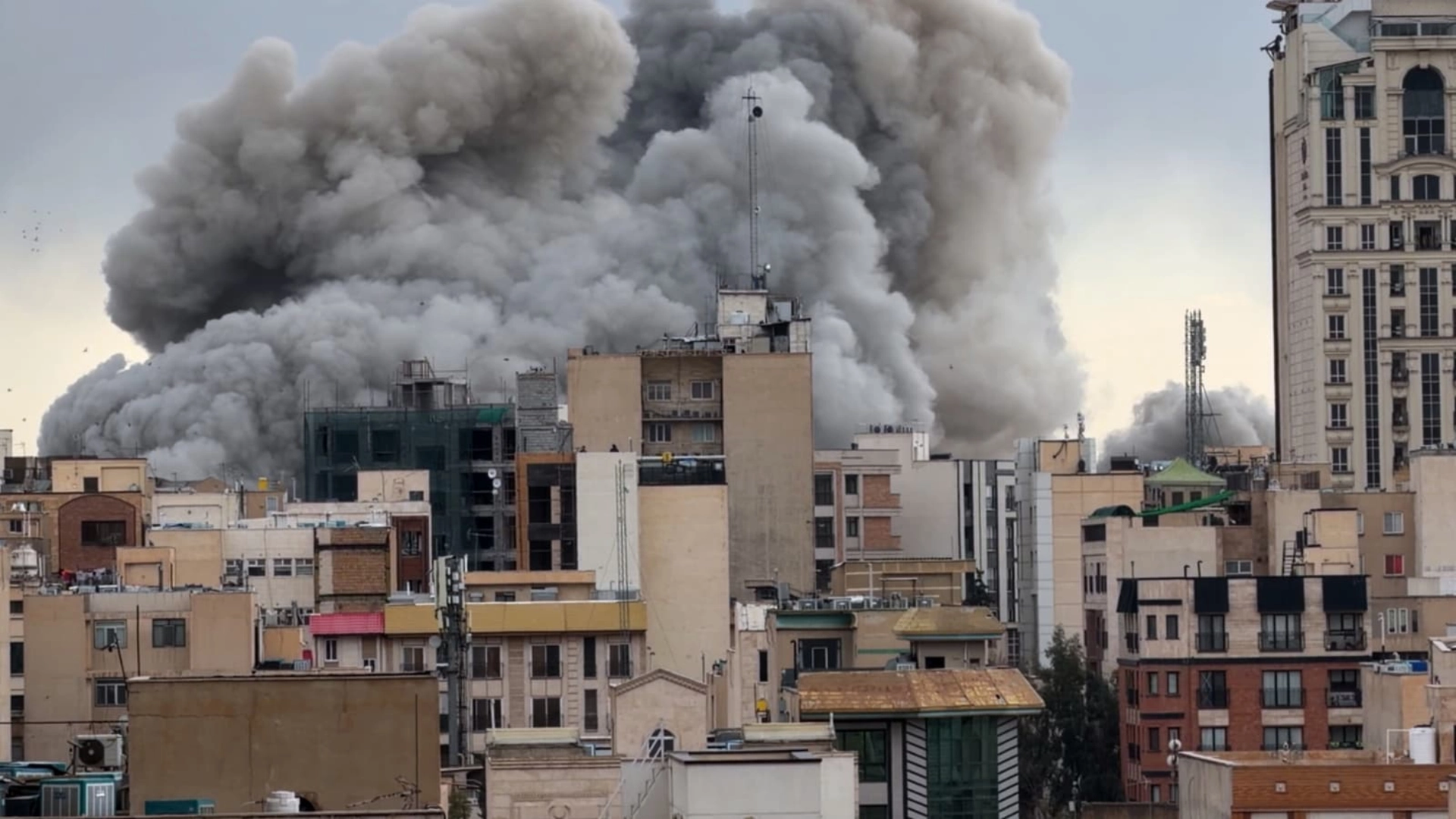
The Middle East edged closer to a wider regional war early Tuesday as Iran announced the closure of the Strait of Hormuz, Saudi authorities confirmed drone strikes on the United States Embassy in Riyadh, and fresh Israeli and US attacks rocked Tehran and Beirut.
Explosions were reported across central, northern and western Tehran as joint strikes continued for a fourth consecutive day. Iranian state media confirmed that key government facilities, including the headquarters of the Islamic Republic of Iran Broadcasting, were hit. Meanwhile, armed groups aligned with Tehran claimed retaliatory attacks stretching from Lebanon to Bahrain.
With the death toll in Iran and Lebanon now surpassing 600, the conflict that began with coordinated US Israeli strikes on February 28 is rapidly reshaping the region’s political and economic landscape.
Tehran Under Fire as State Broadcaster and Government Complexes Are Targeted
Iranian Students News Agency reported that parts of the IRIB headquarters in Tehran were struck early Tuesday. Despite the damage, the broadcaster said its signal remains operational due to precautionary measures taken in advance.
Additional targets included the Shahid Motahhari government complex near Vali Asr and Imam Khomeini streets in downtown Tehran. Multiple blasts were heard across the capital, adding to the sense of chaos gripping the city.
The Human Rights Activists News Agency reported that at least 96 people were killed in the latest wave of strikes on Monday, including 85 civilians and 11 military personnel. The group said the cumulative civilian death toll since February 28 has reached at least 742, including 176 children. The Iranian Red Crescent previously put the total at 555. These figures could not be independently verified.
In Lebanon, Israeli forces struck Beirut’s southern suburbs again, with residents in areas including al Ghubeiri and Haret Hreik ordered to evacuate ahead of incoming attacks. Israel’s military has also issued urgent displacement warnings covering at least 59 areas in southern Lebanon, citing Hezbollah activity.
Iran Declares Strait of Hormuz Closed as Oil Prices Surge
In a dramatic escalation, the Islamic Revolutionary Guard Corps announced the closure of the Strait of Hormuz, one of the world’s most vital energy corridors through which roughly a fifth of global oil consumption passes.
Brigadier General Ebrahim Jabari, adviser to the IRGC commander, said on state television that Iranian forces would set fire to any ships attempting to cross the strait. He also threatened regional oil pipelines, declaring that oil exports from the region would not continue until pressure is placed on what he described as the enemy.
Oil prices surged past 79 dollars per barrel on Monday after dipping to 73 dollars last week. Vessel tracking service Kpler reported that major commercial operators, oil companies and insurers have effectively withdrawn from the strait amid mounting risk.
Security analysts warned that a sustained closure would carry profound consequences. Cormack McGarry of Control Risks described a total shutdown as unlikely over the long term, suggesting it could draw Gulf states directly into the conflict and severely disrupt regional supply chains.
Even so, markets remain on edge as fears grow that energy flows could become a central battlefield in the unfolding crisis.
US Embassy in Riyadh Hit by Drones as Saudi Forces Intercept More Attacks
Saudi Arabia’s Defence Ministry confirmed that at least two drones struck the United States Embassy in Riyadh, causing a limited fire and minor material damage within the embassy compound. No casualties were reported.
Shortly afterward, Saudi forces intercepted and destroyed eight additional drones heading toward Riyadh and the nearby city of Al Kharj.
In Bahrain, Iran’s Revolutionary Guard claimed it carried out a massive drone and missile attack on a US air base in the Sheikh Isa area, deploying 20 drones and three missiles. The group said it destroyed the main command building and set fuel tanks ablaze. There was no immediate confirmation from Bahraini authorities.
Meanwhile, a drone was shot down near Erbil International Airport in northern Iraq, according to local media reports, further underscoring the widening geographic scope of the confrontation.
Hezbollah and Regional Militias Join the Fight
Hezbollah claimed it launched a dawn drone attack on Israel’s Ramat David Air Base in northern Israel, targeting radar installations and control rooms. The group described the operation as retaliation for Israeli strikes across Lebanon.
The Israeli military said it intercepted two drones launched from Lebanon. It has continued to issue evacuation orders for large parts of southern Lebanon and the southern suburbs of Beirut.
In a statement, Hezbollah defended its missile attacks as a legitimate response to what it called 15 months of Israeli aggression in violation of a 2024 ceasefire agreement. The group said assassinations and destruction could not continue without a response.
The Lebanese prime minister has since announced a ban on Hezbollah’s military activities, stating that its role will be restricted to the political sphere. Whether that directive can be enforced amid active hostilities remains uncertain.
Washington Defends Action as Tehran Accuses US of Acting for Israel
Iran’s Foreign Minister Abbas Araghchi accused Washington of entering a war of choice on behalf of Israel. In a statement posted on social media, he rejected US claims that Tehran posed an imminent threat, arguing that American involvement was driven by Israeli interests.
US Secretary of State Marco Rubio had said Washington joined the strikes after determining that Iran would likely retaliate against American assets in the region. He described the action as defensive.
Vice President JD Vance dismissed criticism that the United States had entered another prolonged Middle East conflict. Speaking on Fox News, Vance said President Donald Trump would not allow a multi year war without a clearly defined objective. He said the objective was to prevent Iran from obtaining a nuclear weapon.
Israeli Prime Minister Benjamin Netanyahu also framed the conflict as limited in scope. He described it as a gateway to peace and suggested it could pave the way for additional normalization agreements between Israel and Arab states, building on previous diplomatic breakthroughs.
Karachi Consulate Stormed as Tensions Spill Into Pakistan
The fallout has not been confined to the immediate conflict zone. In Pakistan, protests erupted outside the United States Consulate in Karachi following reports of the killing of Iran’s Supreme Leader Ayatollah Ali Khamenei in the initial strikes.
Reuters reported that US Marines opened fire during the storming of the consulate compound, citing two US officials. It remains unclear whether the rounds struck demonstrators. At least 10 people were reported killed when protesters breached the compound’s outer wall.
The US Embassy in Islamabad subsequently canceled all visa appointments across Pakistan until Friday, citing the current security situation.
A Region at a Crossroads
Diplomatic observers suggest that global powers are recalibrating their positions as the conflict deepens. Some analysts argue that Russia may benefit strategically from the diversion of international attention away from Ukraine, while European leaders grapple with accusations of double standards regarding international law.
For now, the Middle East stands at a precarious crossroads. Tehran has signaled that it is prepared to weaponize energy routes. Israel has intensified strikes on what it calls strategic targets. The United States insists its objective is narrowly defined, yet American assets across the region are increasingly under threat.
With civilian casualties mounting, oil markets surging, and armed groups mobilizing across multiple borders, the coming days may determine whether this remains a contained confrontation or erupts into a broader regional war with global consequences.
The world is watching the Strait of Hormuz, the skies over Tehran and Beirut, and the diplomatic channels that could still avert a deeper catastrophe.

Edit Profile
Help improve @KR

Was this page helpful to you?
Contact Khogendra Rupini
Are you looking for an experienced developer to bring your website to life, tackle technical challenges, fix bugs, or enhance functionality? Look no further.
I specialize in building professional, high-performing, and user-friendly websites designed to meet your unique needs. Whether it’s creating custom JavaScript components, solving complex JS problems, or designing responsive layouts that look stunning on both small screens and desktops, I can collaborate with you.
Create something exceptional with us. Contact us today
Open for Collaboration
If you're looking to collaborate, I’m available for a variety of professional services, including -
- Website Design & Development
- Advertisement & Promotion Setup
- Hosting Configuration & Deployment
- Front-end & Back-end Code Implementation
- Code Testing & Optimization
- Cybersecurity Solutions & Threat Prevention
- Website Scanning & Malware Removal
- Hacked Website Recovery
- PHP & MySQL Development
- Python Programming
- Web Content Writing
- Protection Against Hacking Attempts